
I'm sure this has happened to you: you think about your move, and the first thing that comes to mind isn't the excitement of moving into a new home, but the worry that your furniture will arrive in pieces.
Scratches, dents, or broken items during transport are all too common when people don't know how to pack properly.
The thing is, not all pieces of furniture are the same: a large wardrobe, a sofa, a glass-topped table… each one requires a different approach.
Packing furniture properly isn't just about throwing everything into boxes and hoping for the best—it's making sure your furniture is just as it was when you arrive at your new home.
That’s why, in this article, we’ll walk you through how to pack and protect your furniture step by step, which materials really work, and what mistakes you should avoid if you want to steer clear of unpleasant surprises.
Why You Can't Just Wing It When Packing Furniture
Cheap things end up costing more, and when it comes to packing furniture, this saying rings even truer.
When faced with a move, many people just grab some old blankets, sheets, or cardboard boxes that “are sure to work.” And that might seem like enough to you…
Until the sofa scrapes against the elevator wall or the glass table takes an unnecessary knock, and those sheets and protective covers that seemed to work haven't protected your furniture as well as you thought they would.

During a move, furniture doesn't just sit there quietly: no matter how well you secure it, it moves, vibrates, and shifts, and often has to pass through very narrow spaces or be exposed to temperature and humidity conditions that may not be entirely ideal for it.
That's why packing furniture using the right materials isn’t a luxury—it’s a necessity if you want everything to arrive just as it was.
Materials That Truly Protect Your Furniture
When it comes to protecting and packing furniture, not all materials are created equal, nor do they offer the same level of protection. And no, those old blankets you had in the storage room aren't enough if you want to prevent damage:
- Sturdy boxes: Cardboard boxes you picked up from the store down the street or reused from things you had lying around the house won’t work.
Those might work for storing clothes or lightweight items, but for furniture you'll need boxes that are of good quality and the right size. This prevents them from warping or coming apart during transport.
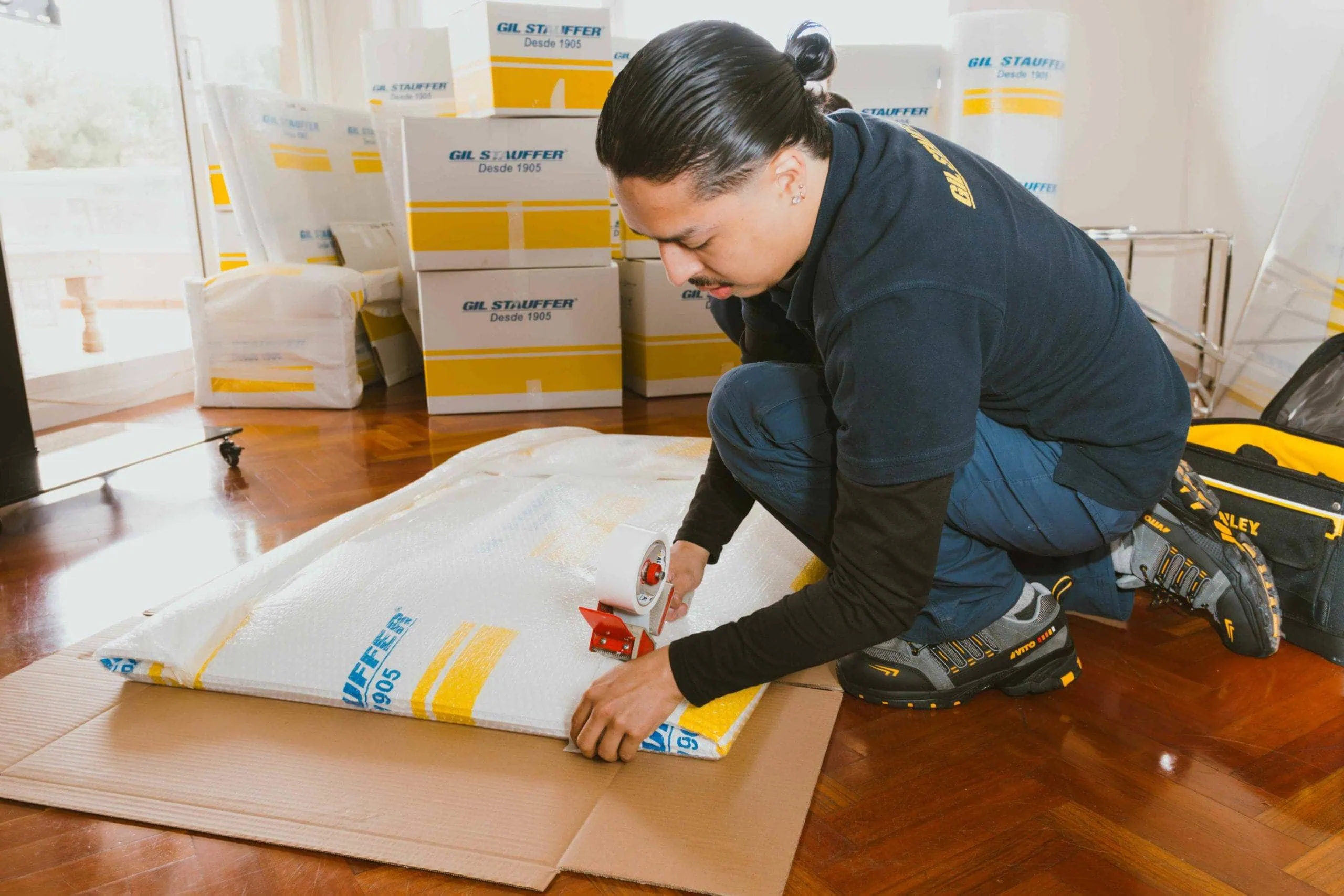
- Bubble wrap: It's almost like magic for delicate surfaces. It absorbs shocks and prevents scratches without being expensive.
- Padded moving blankets: unlike those used at home, these are designed to withstand multiple moves and provide better protection for bulky furniture.
- Protective plastic film: helps keep everything compact and prevents the blankets or paper from shifting.
- High-quality adhesive tape: the kind that stays put where it's supposed to. If you want to make sure your package doesn't open in the middle of the truck, please don't use cellophane tape or masking tape.
These materials aren't a "frivolous" expense: they're the difference between a move without drama and one full of phone calls and repairs.
How to Pack Different Types of Furniture
Not all furniture is packed the same way. Each material and shape requires a different strategy to ensure it remains undamaged during transport:
Large, Bulky Furniture: For furniture such as wardrobes, bookcases, or beds, the key is usually to taking apart as much as possible.
This makes transportation much easier and reduces the risk of damage. Just be sure to store screws and small parts in labeled bags. There’s nothing worse than losing a part and not knowing which piece of furniture it belonged to or where to find a replacement.
Delicate surfaces (wood, glass, lacquered surfaces): You really have to be careful here. First, cover them with cardboard or padded blankets, and then wrap everything in plastic wrap so nothing moves.
The plastic wrap keeps everything snug and prevents the corners from getting bumped because the blankets or bubble wrap shift around.
Sofas, mattresses, or upholstery: In these cases, the best option is special covers that protect them from dust, moisture, and bumps during transport. Not only do they stay cleaner—they arrive at the new home looking brand-new.
After all, every piece of furniture has its own “language,” and understanding it will save you from having to look for solutions when it’s already too late.
The Importance of Packing Thoughtfully and Organizedly
Packing furniture without a plan will only cause you headaches. If you label each piece of furniture or group of items with the room it belongs in and note whether it requires special handling, everything will go much more smoothly.

This will not only help you and the moving professionals know where everything goes, but it will also speed up the process of setting everything up and unpacking when you arrive at your new home
You'll know right away where everything you need is, you won't drive yourself crazy looking for things that aren't labeled, and you'll know exactly which parts to assemble next.
Also, keeping a simple record of the disassembled furniture—with photos or a note to help you remember which piece goes where—will save you time and frustration, which can be quite unpleasant when it’s time to put everything back in its place.
Other common (and easy-to-avoid) mistakes
There are mistakes that happen time and time again during almost every move—and that could have been avoided with a little foresight:
- Using low-quality materials: Yes, we’ve already talked about this, but even if you really think old blankets are good for wrapping furniture… They’re not.
- Failing to properly protect corners and edges: These are the areas that take the brunt of any movement, so give them some extra care when you’re packing your furniture.
- Trying to move large pieces of furniture without taking them apart when you can: sometimes taking it apart for half an hour beforehand is better than breaking something by insisting on squeezing it through the door.
- Failing to secure the packaging properly: If everything is shifting around inside the blankets, you’re not protecting anything. Use plastic wrap or tape to keep everything in place during shipping.
These are small details that will save you from much bigger headaches.
Packing furniture properly isn't just a matter of "wrapping it up a bit and calling it a day": it's about understanding what each piece needs, choosing materials that actually serve their purpose, and taking the time to organize everything thoughtfully.
If you do this, your furniture will not only arrive at your new home in one piece… it’ll arrive without any drama, without any surprises, and with less stress than you might imagine.
At Gil Stauffer, we don't just handle moves—we also offer professional packing services so your furniture is protected right from the start.
Want to know how we do it? Contact us and find out just how easy your next move can be.